Workshop: AI and social justice in climate communication
Goal
Artificial intelligence is transforming environmental communication. Using the example of the EU-wide ban on internal combustion engines by 2035, participants discussed the opportunities and challenges posed by AI with regard to marginalized groups such as low-income individuals and non-citizens in the field of communication. Based on this discussion, the participants developed alternative approaches.
Setting
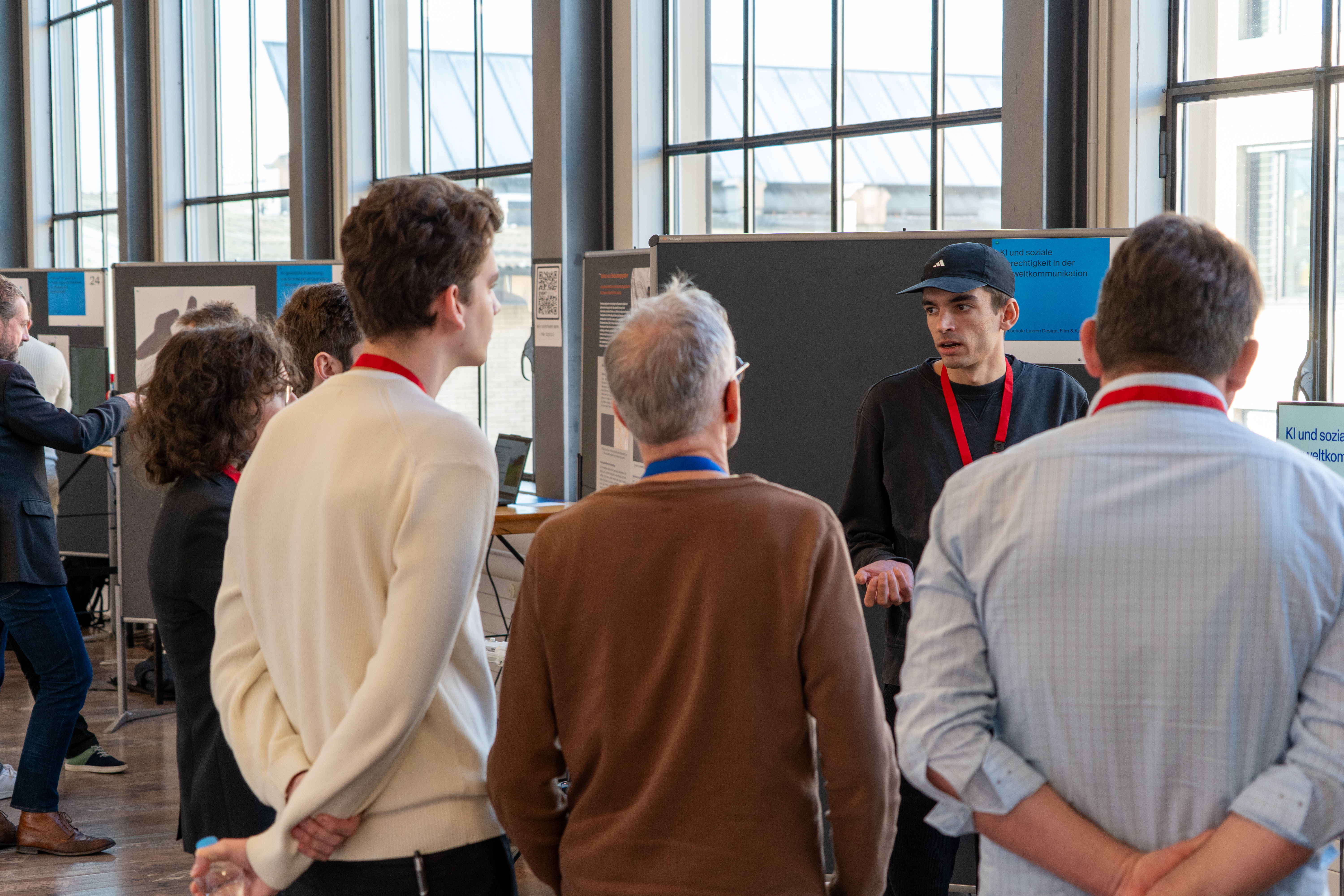
The 10th Environmental Observation Conference took place in Bern on the 27th and 28th of November. The conference target group was mainly Environmental experts (environmental agencies and research institutions), communications experts (authorities, NGOs), media professionals, data officers, and AI experts, government actors (policy makers) (Künstliche Intelligenz in Der Umweltbeobachtung Und Berichterstattung, n.d.). Next to the typical keynotes on the first day, there are so-called market stalls. In total, there were 24 exhibitors ranging from presenting implemented applications that use AI, for example, to recognize birds, to workshops and discussion formats. The visitors were assigned to 3 different stalls for 30 minutes after each session, and they could explore the surrounding market stalls. Within the format, I could create a workshop format to discuss climate communication.
Workshop outline
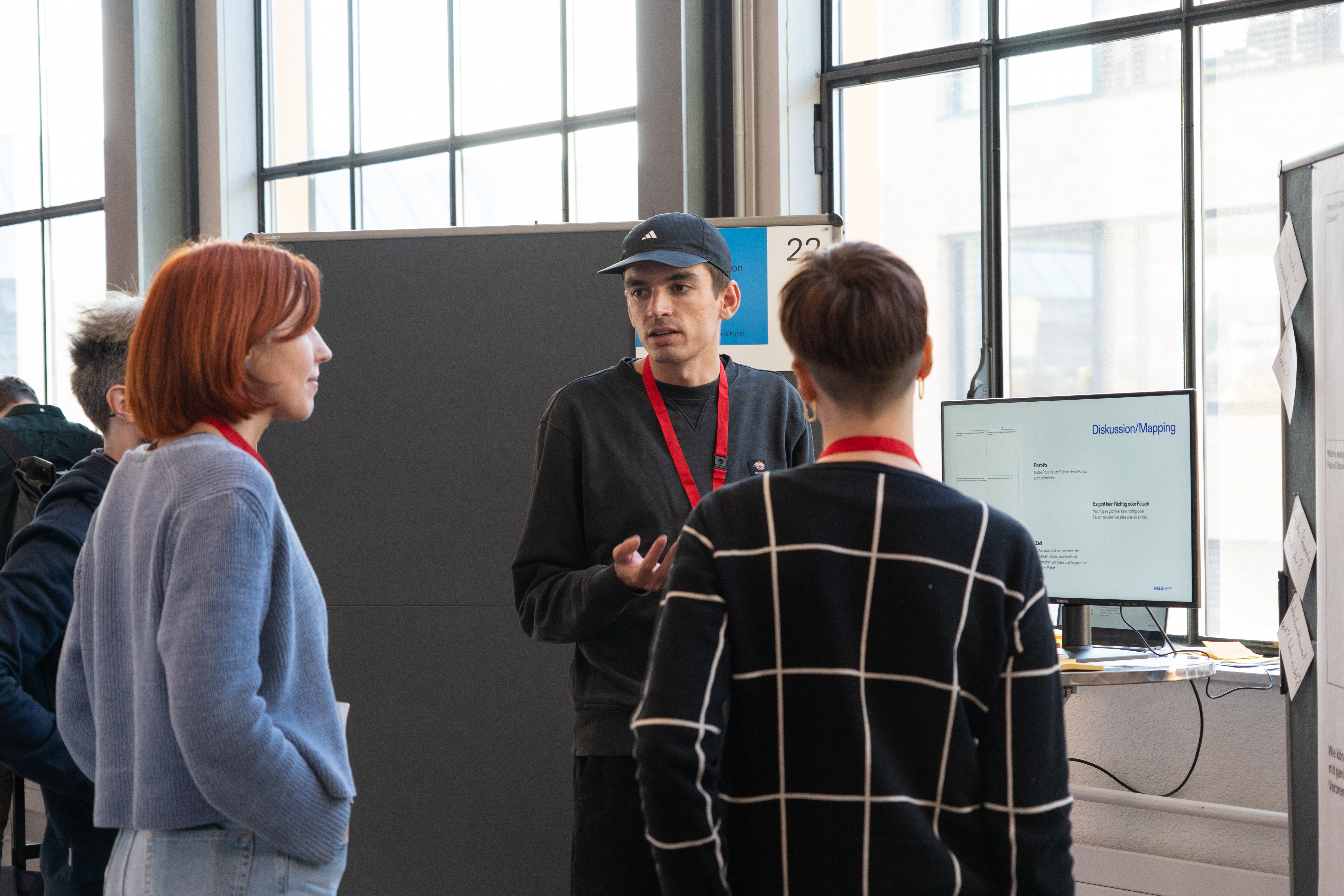
The theme of this year’s Conference was AI; therefore, the workshop focused on AI. Artificial intelligence is also changing environmental communication. This rapid change presents us with new opportunities and challenges. Significant challenges posed by rapid change include a lack of transparency, distortions due to training data, and the resulting neglect of marginalized groups. By using the example of the EU-wide ban on combustion engines from 2035, we will work together to develop ways to address these challenges and to involve marginalized groups, such as people on low incomes or non-citizens, in the communication process. To this end, we will take a critical look at the potential of AI and at qualitative methods to develop a strategy. The workshop aimed to encourage participants to engage in critical reflection on AI tools and the integration of qualitative methods into environmental communication. Furthermore, by focusing on marginalized groups, it may raise participants’ awareness of the topic and foster positive change in their daily practice, encouraging them to consider and include those groups in their processes. The three sessions began with a brief presentation of the overall topic, followed by a discussion of the marginalized group’s scenario and context. The marginalized group was, in this context, defined as lower-income groups, as in previous measures by the German government; people with higher incomes mainly profited from the subsidies. Afterwards, the mapping was explained and each of the questions, which were the following: (1) “Which AI tools could break down barriers to participation?” (2) “Where does AI increase the risks of exclusion for certain groups?” (3) “Which analog methods work in practice? (Social associations, businesses, local initiatives)“and (4) “What forms of participation would be needed?”
Outcomes
Overall, the workshop showed that participants had struggled to find ways to communicate and include the group in the discussion of climate change mitigation. However, despite their concern, the groups still brought up a lot of ideas and had discussions within those 30 minutes. The ideas often tended to aim to make the electric vehicle and its benefits more tangible by showing how their usage would be through a scenario-based AI bot, where people could type in their daily driving patterns, or in the analog world by providing pop-up test drives in their neighborhoods. Further, when it came to how to target them, the majority of responses focused on intersecting in everyday life situations, ranging from the “Stammtisch” to cooperating with local sports associations.
Refelction
The workshop showed that there may still be a gap in how marginalized groups are included in discussions of the combustion engine ban for 2035 and in the broader picture of climate change mitigation communication. There may be potential for further workshops with these target groups to raise awareness and incorporate the ideas into their daily work. For that, the topic in the workshop itself still needs to be introduced, and, with a longer workshop duration, a reflection on how the participants could integrate it into their work could be incorporated. Nevertheless, in discussions, marginalized groups should not be generalized, as approaches may differ, depending on the group and context. This may also add another layer of complexity to the discussion. Also, it may show the urge to target different segments differently based on their behavior.