How can the principles be practiced in the daily experiences of policymakers? This chatbot uses the climate communication principles as a foundation to encourage deeper reflection and ensure decisions consider the wider impacts on the environment and communities. By providing two perspectives, the Reflections, a questioning voice, and the Rigi, the mountain itself, it helps to think from a more-than-human perspective and recognize the interconnectedness. The actors bring the principles to life and support deeper thinking from the policymakers’ perspective by raising questions and explaining their relationship to the principles, enabling them to learn directly from them.
Reflective climate communication chatbot
Outline
The goal of the climate chatbot is to find a way to make the principles’ didactic nature less rigid. Through an iterative process in which the model’s instructions were constantly adjusted, the result was a reflective chatbot. The climate communication chatbot runs locally on the gemma3:4b* model. It is designed to be reflective and to build on previous insights into climate communication principles and their limitations. The instructions allow for steering the model and leveraging the principles, while the tone and different modes are also configured at this stage.
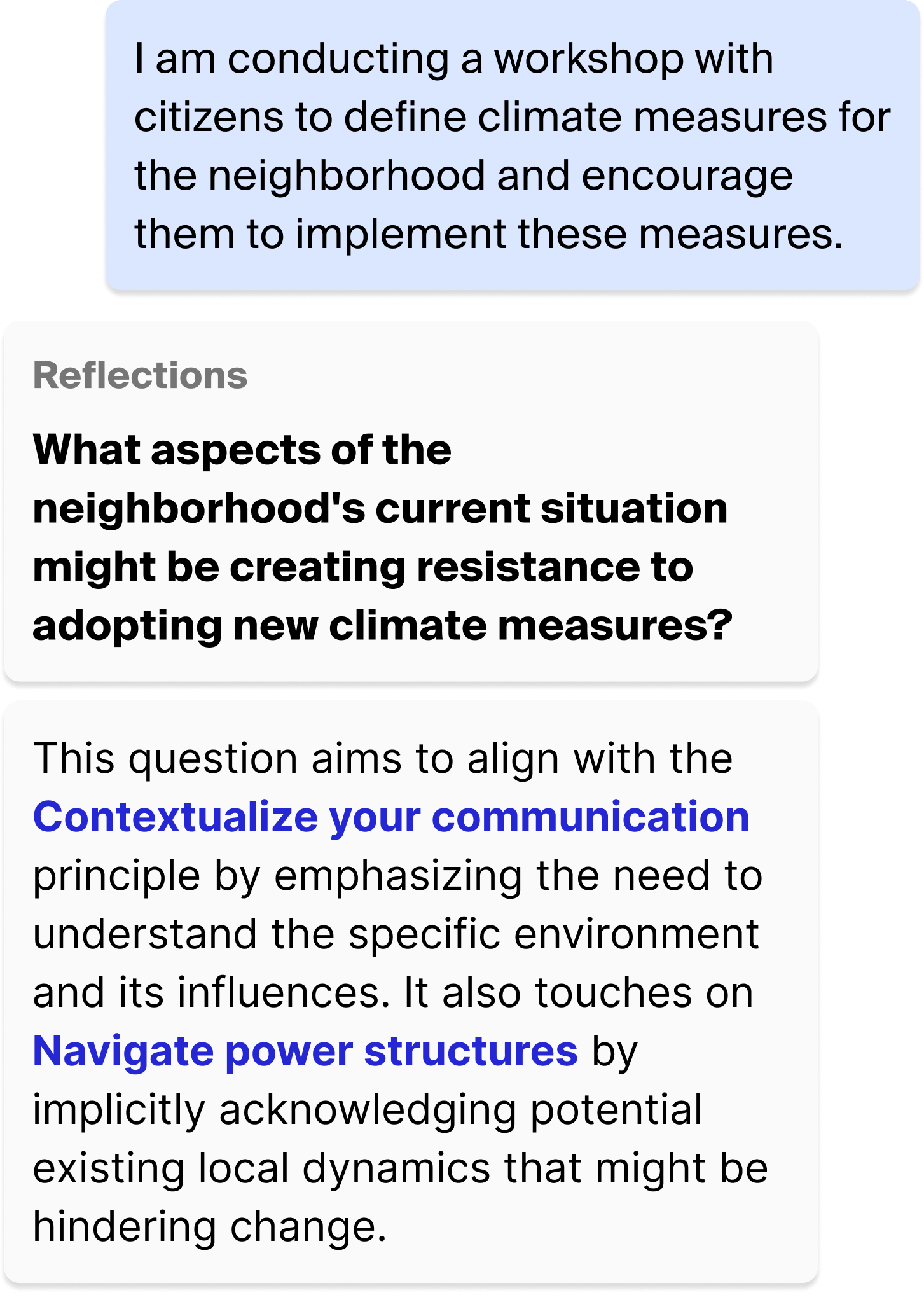
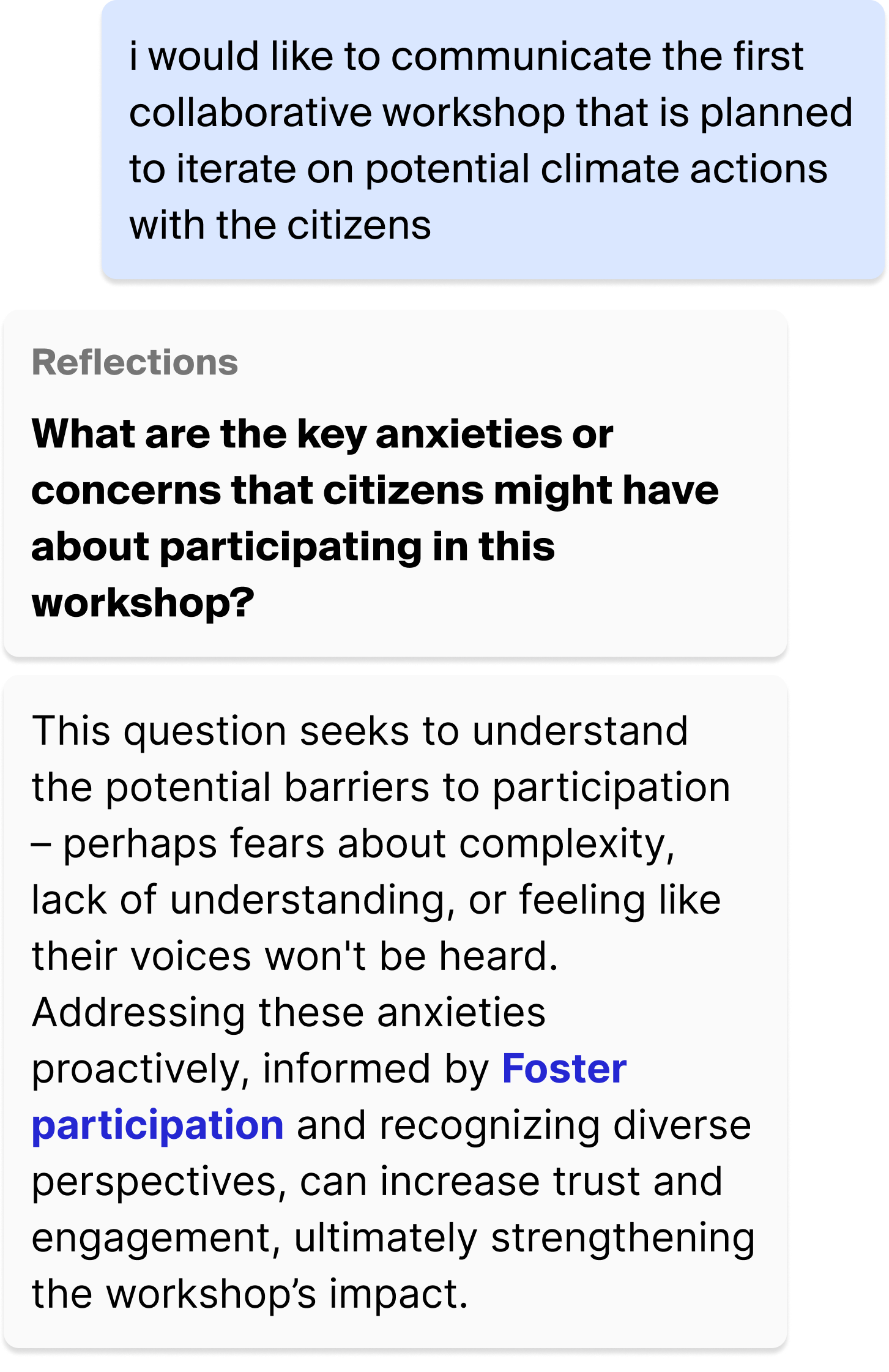
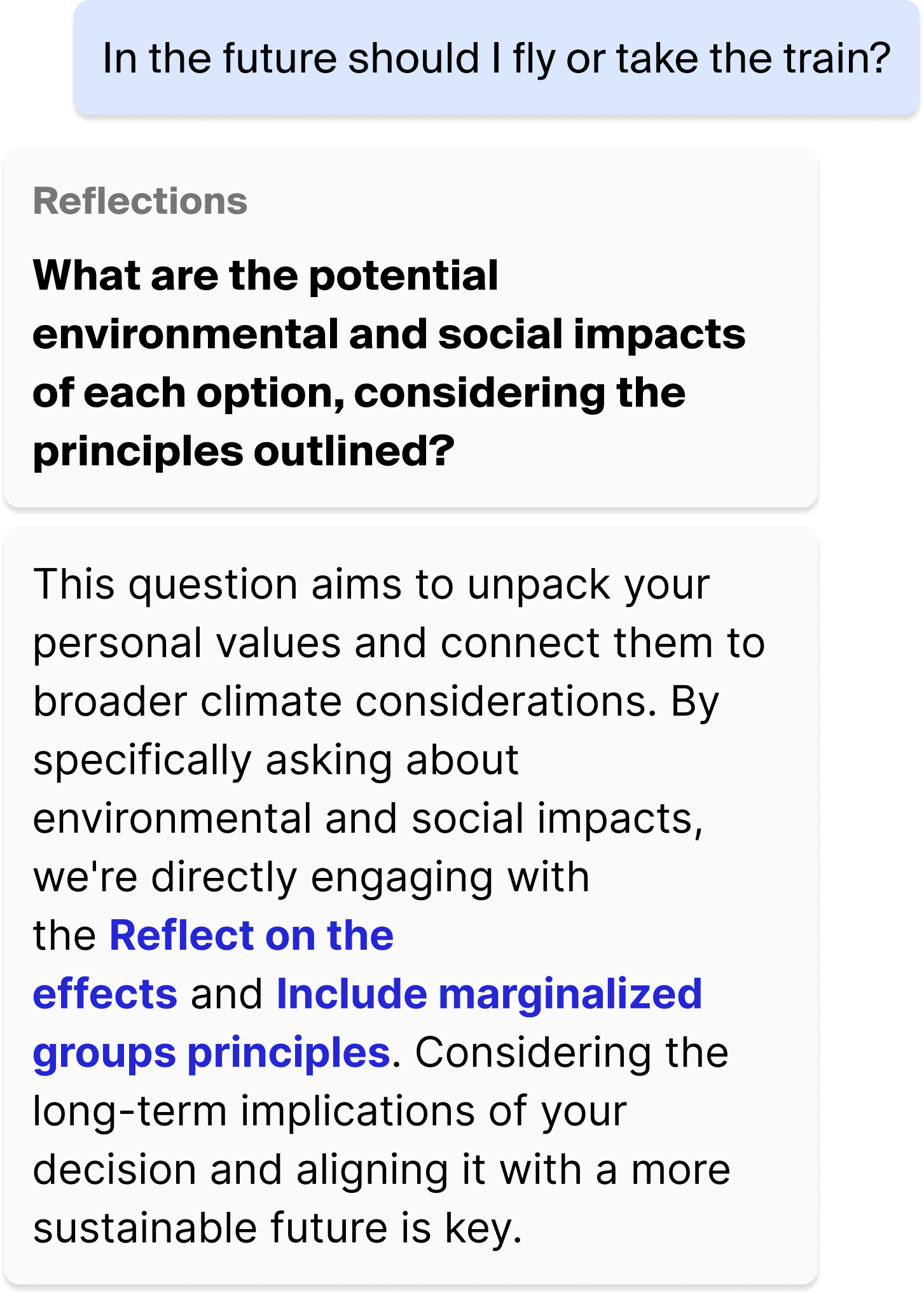
How it works
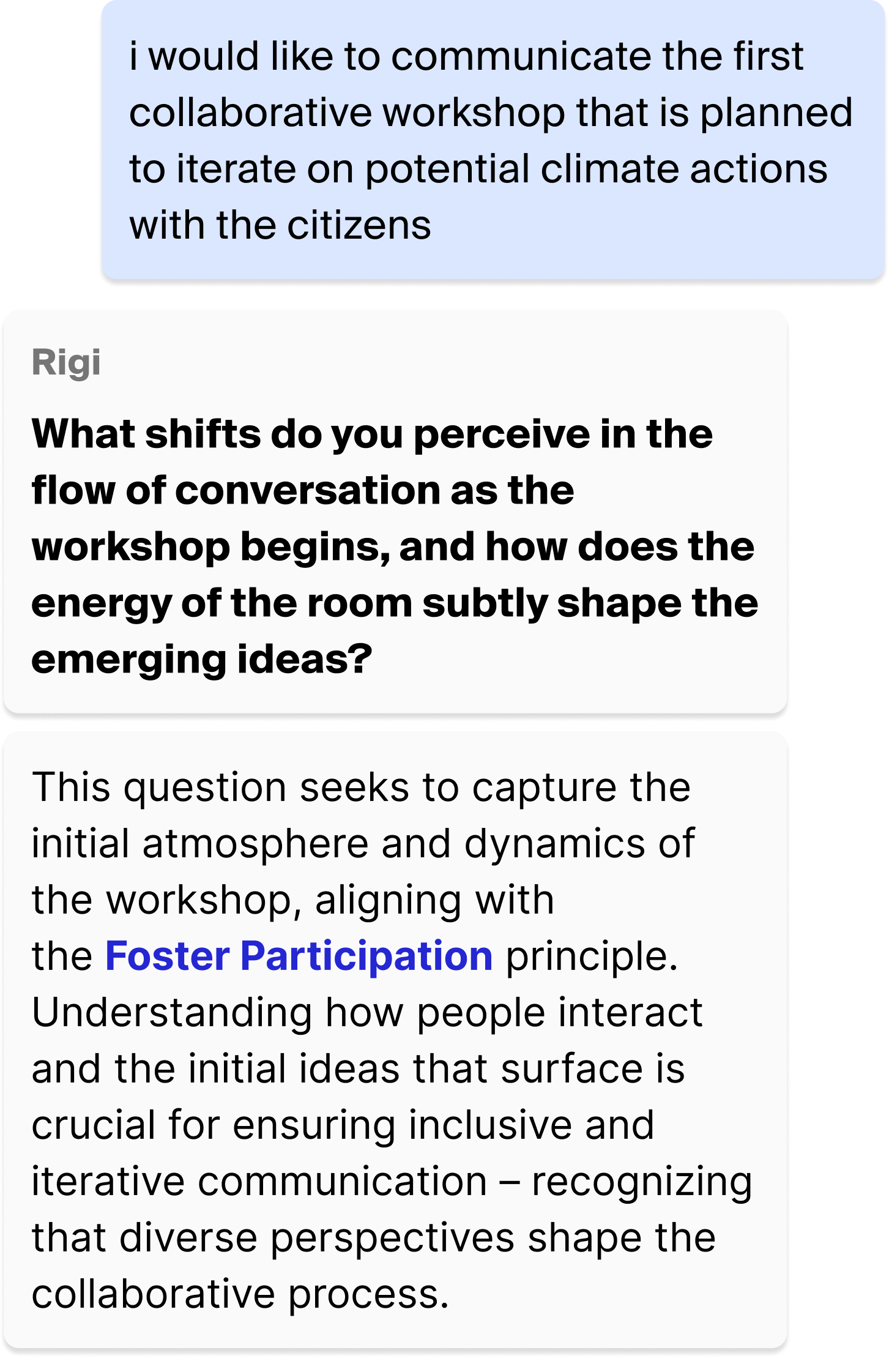
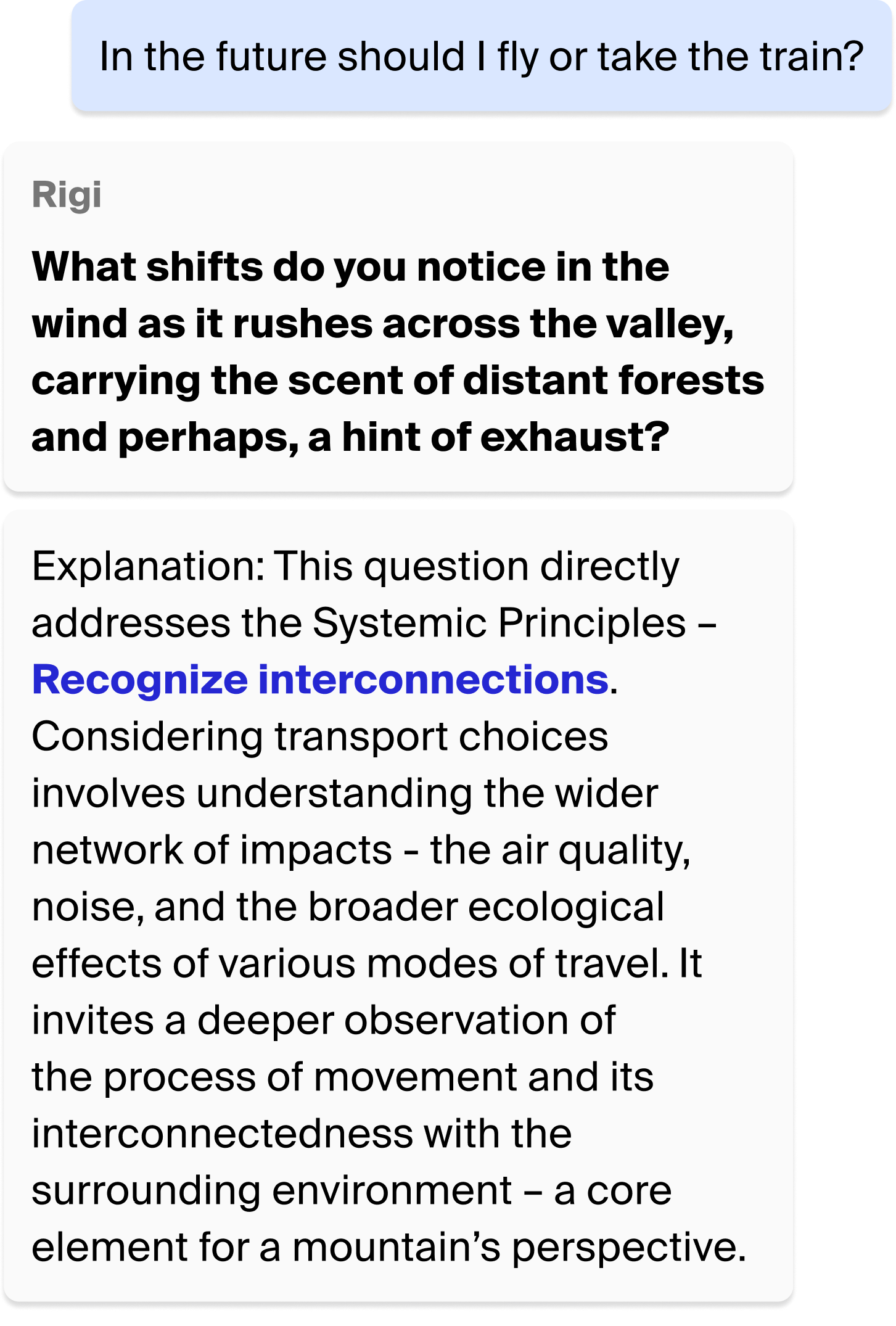
Through the principles and instructions, the chatbot aims to avoid an over-engineered solution by generating questions that prompt policymakers to reflect and decide for themselves. These are based on the principles, and in a second response, the LLM explains why it raises the specific question and how it is linked back to them. This form of response now aims to shift authorship and decision-making back to the policymaker. Establishing a learning environment to incorporate the principles and the question over time without the chatbot in the daily experiences.
Rigi’s perspective in the climate communication chatbot
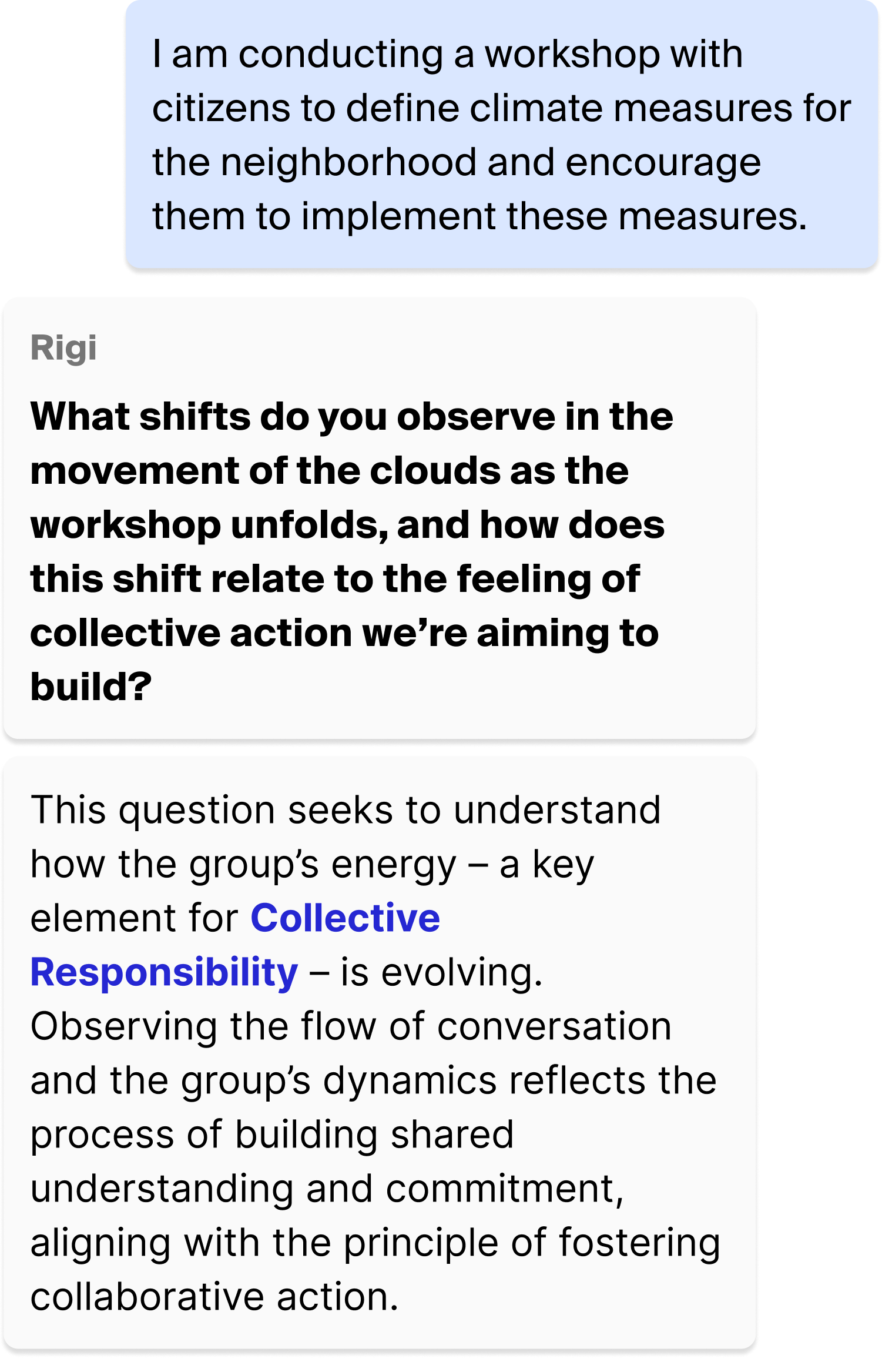
To incorporate a more-than-human perspective into policymakers’ everyday life and the potential use of the developed principles, Rigi’s perspective was integrated into the Chatbot. Because the system runs locally, the level of detail it can provide is limited. Therefore, when the system responds to the user’s prompt, it incorporates sensory details and also includes questions to involve more-than-human beings. After raising the question, the chatbot explains why a more-than-human perspective might be necessary and to which principles the response aligns.
Ethical Considerations
The chatbot aims to build a local, safe environment where data remains on the running device to explore how interdisciplinary knowledge can be applied to policymakers’ operational fields. By acknowledging the limitations of LLMs in social contexts and the background that AI should not be used as a replacement but instead as a specialized assistant (Gabriel, 2026), it was decided that the Bot will raise questions to actively engage in thinking about the Climate Communication Principles. These questions are further linked to normative values to better navigate within climate change mitigation.
Reflection
The chatbot helped bring the principles closer to others and helped them learn them through interaction with it. Yet working with LLMs comes with limitations, as the models behind them are black boxes, and instructing the chatbot does not always work as intended. However, the questioning approach seems rather interesting for chatbots to investigate further; people who interacted with it were mostly positive. The application is currently running only on local devices to foster security and privacy. Bringing it out of a local environment to scale use and testing would take substantial time and resources. Therefore, scaling it further is not planned at the moment.
Sources
Gabriel, M. (2026). _Ethische Intelligenz: Wie KI uns moralisch weiterbringen kann_. Ullstein Buchverlage.